

 Español
International SEO Agency Barcelona for Markets That Matter
A search programme can lose qualified visitors when it treats every country and language as the same market. SparkSEO connects Barcelona-based market knowledge with clear international planning, so people reach pages that fit their search, language and needs.
SparkSEO is a performance-oriented SEO agency in Barcelona, Spain. We support Spanish, local, international and multilingual projects with a human-first approach, practical market decisions and reporting that makes the work visible. Learn more about SparkSEO.
- Barcelona market knowledge
- Multilingual site planning
- Local search relevance
- Market-level reporting
- Clear working hours

Based on 14 active clients with at least 12 months of data. Updated October 2026. See how we measure results
Start in Barcelona, then build each market on its own evidence
A business can have a strong offer in Barcelona and still lose the right visitor when a nationwide or overseas page uses generic language. For example, a dental group may need location details and a Google Business Profile in Barcelona, while its broader Spanish pages need different search terms and a different conversion path. The useful response is one market brief per audience, rather than one page copied across every place.
SparkSEO is an SEO agency in Spain with a base in Barcelona. That local context matters when a business needs to distinguish a city search from a national service query, or when its real service area is narrower than its ambition. We identify the offer, geography, audience and next step for each important page before we change titles, content or internal links.
For SEO Barcelona businesses, the first priority is often discoverability close to the office, clinic or store. Our local SEO service connects accurate business details, location pages and genuine local proof. For a company selling or generating leads in several countries, our international SEO service adds the language, country and technical work that local search alone cannot cover.
An international plan still needs a clear local centre. We keep Spain, Barcelona and every additional market visible in the roadmap, then measure non-branded keyword groups by landing page. This helps your team see whether a page is attracting people who do not already know the company, rather than hiding a weak market behind branded traffic.
A useful market definition names the people served, the language they search in, the offer available to them and the page that should help them decide.
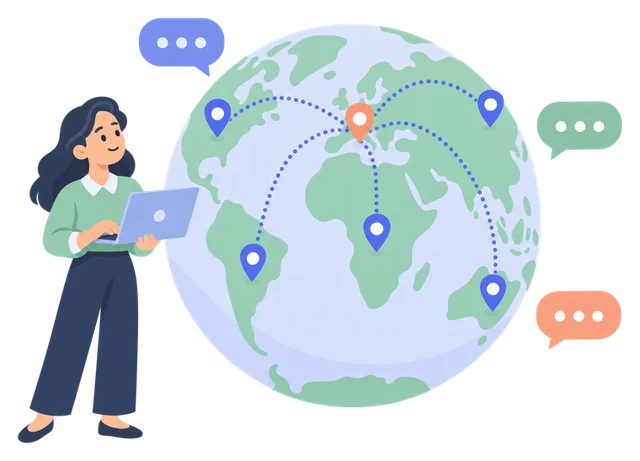
Our published work spans local, multilingual and English-speaking markets
Market claims are hard to assess when they describe a country without showing the type of business or work involved. For example, a local clinic, a seven-market retailer and a B2B software company face different search and conversion problems. These published, anonymized cases show the scope of projects SparkSEO has reported, while keeping client names private under NDA.

Barcelona dental group
A group with three locations ran a 12-month local SEO programme. SparkSEO reported 61% more calls from Google Business Profile and 19 of 48 keywords in the Map Pack Top 3, up from 6, after work on the profile, location pages and reviews.

Furniture e-commerce
A retailer serving five languages and seven markets completed 12 months of technical SEO, hreflang and content work. SparkSEO reported 48% growth in non-branded organic revenue and hreflang errors falling from 1,180 to 36, with a May core update decline followed by recovery.

B2B HR software
A US and UK project ran for 10 months across AI prompt research, content and blogger outreach. SparkSEO reported client citations in 11 of 35 tracked AI prompts, up from 2, and 34% more demo requests from organic search.
What changes when you enter a new market
A page that wins in one country can miss the search task in another, even if the language looks similar. A US and UK service page may use different commercial terms, show different proof and appear beside different result formats. We replace assumptions with a documented market process that gives content, technical and commercial teams the same reference point.
Check how discovery works locally
We check search engine share, visible result features and the search services a qualified audience actually uses. That prevents a plan from treating one global search pattern as universal.
- Search engine mix
- Result-page features
- Device and query context
Research local demand and language
We build a market keyword set from local phrases, buyer questions and commercial priorities instead of translating a source list word for word. Keyword and AI prompt research gives each landing page one approved related keyword group that can be measured clearly.
- Local vocabulary
- Buyer intent
- Page priorities
Map the right page versions
A multilingual website has content in more than one language, while a multi-regional website explicitly targets more than one country. Google's international site guidance recommends separate URLs for language versions and calls for clear language choices for visitors.
- Audience per URL
- Language selector
- Equivalent page map
Agree constraints before publishing
We record availability, currency, delivery, professional advertising rules and legal-page needs with the responsible client team. This prevents a market page from promising something the business cannot provide and keeps relevance ahead of volume.
- Offer boundaries
- Required approvals
- Market ownership
Use one practical brief to control country-level changes
Expansion often becomes a queue of translations with no record of why the pages differ. For example, a team may add an English page for the UK but forget that its shipping terms, spelling and legal information also need review. A shared brief makes differences explicit before they become duplicate content, unclear offers or reporting gaps.
| Decision area | What can change by market | What we verify |
|---|---|---|
| Search discovery | Search engine share, result layout and query format | Where qualified prospects search and what appears before an ordinary result |
| Language and demand | Vocabulary, spelling, questions and category terms | Whether the page answers local buyer intent in plain language |
| Website structure | Country URLs, language variants and fallback routes | One equivalent page set, visible language choices and accurate hreflang |
| Commercial information | Availability, currency, fulfilment and local proof | Whether the offer is accurate and usable for the target audience |
| Legal and trust pages | Business disclosures, consent and advertising constraints | Country-level review before a regulated or personal-data claim goes live |
Google's localized-page documentation says hreflang can identify language or regional variations and that alternate pages should include reciprocal links. The technical map works best when it reflects a real market decision, not a label added after publication.
Translation alone cannot carry a market page
A literal translation can preserve every sentence and still leave a buyer unsure whether the offer applies to them. For example, a furniture category page may keep a US measurement or delivery promise on its UK version, which creates uncertainty at the moment of comparison. The solution is localization: reviewing language, offer, proof and page purpose together while keeping product claims accurate.
Copy-first approach
- Translate a source keyword list without checking local phrasing
- Reuse prices, delivery claims or product details that do not apply
- Send every language to one generic contact or category page
- Publish thin country pages only to collect more queries
Market-relevant approach
- Research the terms and questions used by the intended audience
- Confirm that commercial and supporting information is true locally
- Give each version a clear next step and useful internal links
- Publish pages people can use, then maintain their language mapping
A market launch should connect the customer journey to the technical map
New-market launches often begin with an urgent request to translate the home page, leaving category pages and contact routes until later. Imagine a Barcelona furniture retailer preparing English-language pages for a new market: shoppers reach a polished home page but find no local delivery explanation on the product category. A stronger launch starts with the pages that answer a buyer's decision, then connects their language versions correctly.
This is a hypothetical example. The retailer identifies its priority product categories, validates the local wording with a human reviewer and confirms which items and delivery terms it can offer. It gives each category a corresponding market URL, links customers to a visible language choice and maps equivalent pages before release.
- Set the country, language, offer and conversion goal for every priority page.
- Review local keywords, product information and internal links with the market owner.
- Add and test reciprocal hreflang references for genuinely equivalent URLs.
- Monitor non-branded clicks, conversions and technical errors by landing page after launch.
The new version can meet a real buyer need instead of acting as a thin duplicate. The team can trace results to specific landing pages, correct gaps quickly and expand only after the useful core journey works.
Treat legal pages and professional rules as part of market quality
Legal information is sometimes left in a footer while market pages collect enquiries, publish prices or make professional claims. For example, a Spanish service page can attract a qualified lead yet give them no clear way to identify the provider or contact it. The right approach is to plan legal and trust information with the country page, then have the responsible legal adviser review what applies.
Spain's LSSI, Law 34/2002, Article 10 requires information-society service providers to make key information permanently, easily, directly and freely accessible by electronic means. The published list includes the provider's name, address or establishment address, email, relevant register details where applicable, tax identification number and clear price information where prices are shown. Read Article 10 of Spain's LSSI before finalizing Spanish legal pages.
Personal data and tracking also need attention where a market page accepts enquiries or uses cookies. The European Commission explains that data protection is a fundamental right in the EU and that the GDPR applies across the EEA. Its EU data-protection framework is a useful starting point, but it does not replace advice on your specific processing, sector or market.
This matters especially for health, legal, financial and other regulated services. Clear authorship, accurate professional details and an approved claims process help a visitor assess the business. They also align with Google's people-first content guidance, which puts trust at the centre of content quality for topics that can affect people's wellbeing.
Measure market work with transparent outcomes, not activity alone
A market programme can generate a long list of edits while leaving the business unsure whether its pages are gaining useful visibility. For example, hreflang fixes may be necessary, but the final question is whether people can discover and use the relevant page. SparkSEO measures non-branded progress by landing page and reports the work alongside results.
Choose the service or guide that matches your market question
A market issue can be local visibility, multilingual architecture, a technical implementation or a sector-specific customer journey. For example, a clinic adding a Barcelona location needs a different starting point from a retailer with duplicate language URLs. These resources help you focus the next conversation on the problem that is actually limiting the page.

International SEO
Explore URL structures, localized content and hreflang planning for multi-country websites.
Read more
Local SEO
See how accurate local information and location pages support nearby searchers.
Read more
Technical SEO
Review crawlability, indexing and the technical checks that support market pages.
Read moreSEO for Dentists guide
Read a detailed SparkSEO guide for dental practices that need local trust and useful patient journeys.
Read moreQuestions about the markets we serve
What does an international SEO agency in Barcelona help with?
An international SEO agency in Barcelona can connect local market knowledge with country and language planning for a wider audience. SparkSEO reviews demand, page structure, local relevance and technical signals so the right version can serve the right searcher.
Does a multilingual SEO agency just translate pages?
No. A multilingual SEO agency should check the local search terms, product or service availability, commercial information and the page's technical relationship to other versions. Translation is useful, but it does not prove that a page meets a local buyer's need.
Which languages does SparkSEO cover?
SparkSEO agrees language coverage market by market rather than publishing a fixed list. The starting point is the language your audience uses to search and buy, plus a market version your team can maintain accurately. We confirm those conditions before building a content or hreflang map.
Can local SEO and international SEO work together?
Yes. A Barcelona business may need a strong local presence for nearby searches and a separate international structure for countries it serves. Local SEO and international SEO work together when each page has a defined audience and a truthful offer.
Do Spanish market pages need legal information?
Spain's LSSI includes information duties for information-society service providers, and other rules may apply based on your sector and data processing. Your responsible legal adviser should review the required legal pages, disclosures and consent approach before publication.
How does SparkSEO work across time zones?
Every client has a personal SEO manager who is online during Barcelona working hours. SparkSEO's published office hours are Monday to Saturday, 9 AM to 8 PM GMT, and Sunday, 9 AM to 6 PM GMT, which gives teams a clear window for planned coordination and reporting.
Sources
- Google Search Central: Managing multi-regional and multilingual sites
- Google Search Central: Tell Google about localized versions of your page
- Spain: Ley 34/2002, Article 10
- European Commission: Legal framework of EU data protection
- Google Search Central: Creating helpful, reliable, people-first content
Get Your Free SEO Plan and Price
Share your website and your personal SEO manager will review it. You receive a plan with priorities, the keyword groups we would target first and a price that follows your non-branded rankings.
- Monthly billing. Cancel at any time and keep every result you paid for.
- A personal SEO manager who is online during Barcelona working hours.
- Weekly and monthly reports measured per landing page on non-branded keywords.